Which Materials Suit a Die-Cutting Machine?
Table of Contents
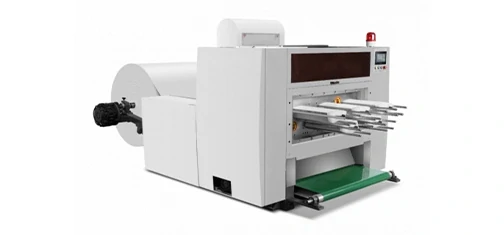
A Die-Cutting Machine in the roll-fed FD series suits 135–400g paper across 950×520mm to 1050×520mm cutting areas—covering coated and uncoated stocks used in paper cups, folding cartons, labels, and pizza boxes. The machine unwinds a continuous web, registers it with a servo and photoelectric eye, and cuts and creases at 100–180 strokes per minute. This article explains which substrates run best, how the servo registration tracks the web, and what to verify when you're matching a roll-fed die-cutter to a continuous packaging line.
How Does Servo Registration Track a Moving Web?
Photoelectric Mark Detection and Feed Correction
The FD series uses a stepping motor and photoelectric eye combination to align the die with the printed graphics. The sensor reads the register mark on the web, and the servo corrects the feed length in real time so the cut lands in the same position relative to the print on every stroke. That closed-loop correction is what keeps the printed design centered on the finished blank, even as the roll diameter shrinks and the web speed changes.
For unprinted stock, the system switches to fixed-length cutting through the microcomputer controller. The operator sets the feed length on the HMI, and the machine cuts to that dimension without needing a register mark. That dual capability means the same machine covers both printed and blank production without a mechanical changeover.
Worm Gear Transmission for Stable Pressure
The main drive uses a worm gear and worm wheel transmission. That geometry delivers powerful and steady cutting pressure at high speed, with low noise and smooth running. A conventional gear train can develop backlash as it wears, and the cutting pressure fluctuates with it. The worm gear maintains the pressure relationship between the motor and the platen, so the cut depth stays consistent across a production run.
| Parameter | FD970×550 | FD970×640 | FD1080×550 |
|---|---|---|---|
| Max. cutting area | 950×520mm | 950×610mm | 1050×520mm |
| Cutting precision | 0.15mm | 0.15mm | 0.15mm |
| Paper gram weight | 135–400g | 135–400g | 135–400g |
| Production capacity | 100–180 times/min | 100–180 times/min | 100–180 times/min |
| Max. cutting pressure | 150T | 150T | 150T |
| Max. roller diameter | 1600mm | 1600mm | 1600mm |
| Total power | 12kW | 12kW | 12kW |
| Air pressure | 0.5MPa | 0.5MPa | 0.5MPa |
| Weight | 6–6.5T | 6–6.5T | 7.5T |
What Does the QT500-7 Frame Contribute at 150 Tons?
The main base frame, moving frame, and top frame are cast from QT500-7 ductile iron. That material has higher tensile strength and better fatigue resistance than standard grey iron, and it resists deformation under the repeated cutting load.
At 150 tons of cutting pressure, a frame that flexes would allow the die to shift, and the 0.15mm precision would drift. The QT500-7 castings hold the die and the platen in fixed relationship, so the cut depth and the crease line stay consistent from the first stroke to the last. The frame also absorbs the vibration that a high-speed press generates, which keeps the web tracking stable and the register marks readable.
Why Does Forced Lubrication Matter for Continuous Operation?
The FD series uses a forced lubrication system that delivers oil to the worm gear and the main bearings under pressure. That continuous oil supply reduces friction and keeps the drive temperature stable through a long production run. If the oil pressure drops, the machine shuts down automatically for protection.
The oil circuit includes a filter to clean the oil and a flow switch to monitor for oil shortage. Those two components turn a routine maintenance task into an automated protection function. On a roll-fed line that runs at 100–180 strokes per minute, a lubrication failure would damage the worm gear before the operator noticed a temperature rise. The forced system prevents that failure mode.
Where Does Roll-Fed Die-Cutting Fit in Production?
A Die-Cutting Machine in the roll-fed configuration is used in printing, packaging, and paper products where the input is a continuous roll. That covers paper cups, paper bowls, folding cartons, labels, and pizza boxes—the products that are converted from a printed or blank web into a die-cut shape before forming or filling.
The FD series from Longge is built for that continuous workflow. The 135–400g paper range covers the coated and uncoated stocks used in food service and consumer packaging. The 1600mm maximum roll diameter allows the machine to run jumbo rolls without frequent changes, and the 100–180 strokes per minute output keeps pace with a mid-to-high-volume converting line.
What Should You Check Before Selecting a Roll-Fed Die-Cutter?
How do I match the cutting area to my blank?
The three models cover 950×520mm, 950×610mm, and 1050×520mm cutting areas. Match the area to your largest blank layout plus the gripper and register margin. A blank that approaches the upper limit leaves no room for the register mark or the die frame.
What paper weight does the machine handle?
The standard range is 135–400g. Lighter stocks in the 135–200g range are used for labels and lightweight cartons. Heavier stocks up to 400g are used for rigid food packaging and cup stock. Confirm your specific grade against the range, and test the material if it sits near the upper limit.
What maintenance does the die station need?
Inspect the cutting die for wear and nicks during scheduled maintenance. A dull die requires more pressure and produces a rough cut edge. Check the photoelectric sensor lens for dust that could affect register tracking. Verify the forced lubrication oil pressure and the filter condition, and confirm the pneumatic clutch-brake engages and releases smoothly.
Straight Answers on Roll-Fed Die-Cutting
What's the difference between roll-fed and sheet-fed die-cutting?
A roll-fed machine takes a continuous web and cuts it without stopping for sheet loading. A sheet-fed machine requires the sheets to be pre-cut and loaded into a feeder. The roll-fed format eliminates the separate sheeting step and the sheet-loading labor, which makes it suitable for high-volume continuous production.
Can the machine cut unprinted stock?
Yes. The FD series supports both register-based cutting for printed graphics and fixed-length cutting for unprinted products. The operator selects the mode through the microcomputer controller, without changing the mechanical setup.
What causes the register to drift on a roll-fed machine?
Register drift usually comes from web tension variation, a worn servo coupling, or a misaligned photoelectric sensor. The servo and sensor combination corrects for tension variation in real time, but the sensor lens should be kept clean and the coupling should be inspected for wear. If drift persists, check the web guide and the unwind tension before adjusting the servo parameters.
What is the maximum cutting pressure?
The FD970 and FD1080 models carry a 150T maximum cutting pressure. That rating covers the paper weights and die designs used in cup, carton, and label production. A die with a large solid area requires more pressure than a die with a simple outline, so confirm the die design against the pressure rating before production.
Let's Match a Roll-Fed Die-Cutter to Your Line
Share Your Blank Size, Paper Weight, and Print Requirement
A Die-Cutting Machine in the roll-fed format should match your cutting area, paper weight, and whether the job is printed or unprinted—not the other way around. The Roll-fed Die-cutting Machine from Longge runs at 100–180 strokes/min with 0.15mm precision, handles 135–400g paper across 950×520mm to 1050×520mm cutting areas, and uses servo registration with photoelectric tracking for printed graphics or fixed-length cutting for blank stock. The QT500-7 ductile iron frame, worm gear transmission, and forced lubrication system support continuous production with minimal downtime. If you're specifying a roll-fed die-cutter for cups, cartons, labels, or pizza boxes, send us your blank size, paper weight, and print requirement — we'll help you confirm the right model before you order.