Why Does a Slitting Machine Mount Vertically?
Table of Contents
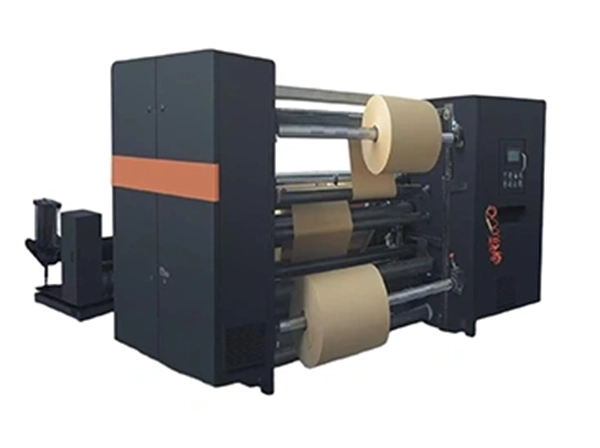
A Slitting Machine in the vertical configuration stands the web path upright, so the film or paper travels from the unwind roll down through the slitting blades to the rewind shafts in a compact, gravity-assisted path. That layout is what allows the machine to run at 10–150 m/min while holding slit width tolerance and edge alignment on materials from BOPP and PET to aluminum foil and paper. This article explains how the vertical architecture stabilizes the web, what the photocell correction system contributes to slit accuracy, and what to verify when you're matching a vertical slitter to your film or paper converting line.
Why Does a Vertical Web Path Improve Slitting?
In a horizontal slitter, the web travels a long path from the unwind stand through the slitting station to the rewind shafts. That length introduces tension variation, and the web can drift laterally as it passes over each roller. A vertical slitter shortens the path. The unwind roll sits at the top of the frame, the web descends through the slitting blades, and the rewound rolls collect at the base. Gravity helps hold the web taut, and the shorter distance between the unwind and the cut reduces the opportunity for tension to wander. The result is a more stable web at the slitting point, which translates directly into more consistent slit widths and cleaner edges on thin films and foils that are sensitive to tension fluctuation.
How Does Photocell Correction Hold the Slit Line?
Edge and Color Tracking for Transparent Materials
A vertical slitter often runs transparent films where a mechanical edge guide cannot see the web boundary. The LFQ-B series uses a photocell system that tracks both the edge and the printed color line on the material. That dual capability matters on printed or laminated films where the slit has to follow a printed register mark rather than a physical edge. The photocell signals the automatic error-correction system, which shifts the unwind stand laterally to keep the web on the slitting line.
Automatic Error Correction at the Unwind
The unwind stand carries an automatic error-correction mechanism that responds to the photocell signal. When the web drifts, the stand moves rather than the slitting blades. That design keeps the blade position fixed and moves the entire roll to compensate, which is a more stable correction than moving the knife shaft on a running machine. The result is slit width consistency across the full length of the jumbo roll.
| Parameter | Vertical Slitter-Rewinder (LFQ-B Series) |
|---|---|
| Max. unwind width | 1100 mm / 1300 mm |
| Max. unwind diameter | Φ600 mm |
| Slitting width | 30 mm (minimum) |
| Max. rewind diameter | Φ400 mm |
| Slitting speed | 10–150 m/min |
| Total power | 4.5 kW |
| Unwind tension control | Magnetic powder brake |
| Rewind tension control | Magnetic powder clutch |
| Error correction | Photocell, automatic |
How Do Magnetic Clutch and Brake Control Tension?
Unwind Brake and Rewind Clutch
The LFQ-B uses a magnetic powder brake on the unwind side and a magnetic powder clutch on the rewind side. The brake applies resistance to the unwinding roll, and the clutch transmits torque to the rewinding shafts. Both devices adjust their torque as the roll diameter changes—the brake releases as the unwind roll shrinks, and the clutch engages as the rewind roll grows.
That diameter-compensating control is what keeps tension constant from the core to the outside of the roll. On a thin film, a tension that rises as the roll builds will stretch the web and change the slit width. The magnetic clutch modulates the torque so the web tension stays within the target window across the full run.
Buffer Start and Stop-Loose Prevention
The machine includes a buffer start-up function and a stop-loose prevention feature. The buffer start ramps the web speed gradually rather than slamming the drive from zero to full speed, which prevents a tension spike at the beginning of the run. The stop-loose prevention holds the web taut when the machine decelerates, so the roll doesn't unwind loosely and create a slack loop that would mis-feed on restart.
What Materials Run Best on a Vertical Slitter?
The vertical configuration handles BOPP, PET, CPP, CPE, PVC, aluminum foil, and paper—the materials that dominate flexible packaging, labeling, and foil converting. Each material has a different stiffness and surface friction, and the magnetic tension control adapts to those differences.
-
BOPP and PET — stiff, clear films used in packaging and labels; the photocell edge tracking handles the transparent surface.
-
CPP and CPE — softer films that conform to the roll; the magnetic clutch prevents the winding tension from compressing the inner layers.
-
Aluminum foil — thin and easily creased; the short vertical web path minimizes the unsupported span and reduces the risk of wrinkle formation.
-
Paper — heavier and less extensible; the vertical path and the buffer start prevent tension spikes that would tear the sheet.
A Slitting Machine in the vertical format like the LFQ-B series from Longge pairs the upright web path with automatic error correction and magnetic tension control to cover this material range in a single platform.
What Should You Check Before Selecting a Vertical Slitter?
How do I match the unwind width to my rolls?
Check the maximum unwind width against your widest jumbo roll. The LFQ-B series covers 1100 mm and 1300 mm widths, with a maximum unwind diameter of Φ600 mm . Running a roll wider than the machine's capacity isn't possible, and running close to the limit leaves no margin for edge trim. Choose the model that covers your roll width with working room.
What rewind diameter and slit width do I need?
The maximum rewind diameter is Φ400 mm, and the minimum slit width is 30 mm . If your finished rolls require a larger diameter, the rewind shaft configuration may need to change. If your product needs strips narrower than 30 mm, a different blade setup or a secondary slitting step is required.
What maintenance does the photocell and tension system need?
Clean the photocell lens regularly—dust on the lens causes the error-correction system to misread the edge or color line, and the web drifts. Check the magnetic powder brake and clutch for wear; a worn powder charge loses torque consistency and the tension wanders. Verify the buffer start and stop-loose functions during periodic checks to confirm the web stays taut through acceleration and deceleration.
Straight Answers on Vertical Slitting
What's the difference between vertical and horizontal slitters?
A vertical slitter stands the web path upright, with the unwind at the top and the rewind at the bottom. A horizontal slitter lays the path flat. The vertical layout shortens the unsupported span and uses gravity to help hold the web taut, which suits thin films and foils that are sensitive to tension variation. The horizontal layout is often used for wider or heavier rolls where the floor space allows a longer path.
Can the machine run transparent film without an edge guide?
Yes. The photocell system tracks the edge of transparent material by detecting the change in light transmission at the web boundary. That optical tracking replaces the mechanical edge guide that would be needed on an opaque material. The same photocell can switch to color-line tracking when the film is printed.
What causes the slit width to drift on a vertical slitter?
Slit width drift usually comes from tension variation or error-correction failure. If the magnetic brake or clutch loses torque consistency, the web tension changes and the slit width moves. If the photocell lens is dirty or misaligned, the error-correction system can't track the edge, and the web wanders. Check the tension devices and the photocell before assuming the blades are at fault.
What's the maximum running speed?
The slitting speed range for the LFQ-B series is 10–150 m/min. The actual production speed depends on the material, the slit width, and the rewind diameter. Thinner films can run toward the top of the range; heavier paper or foil may run slower to maintain edge quality and tension stability.
Let's Match a Vertical Slitter to Your Converting Line
Share Your Web Width and Material Requirements
A Slitting Machine in the vertical configuration should match your unwind width, slit width, and material type—not the other way around. The LFQ-B series from Longge handles 1100 mm and 1300 mm unwind widths at 10–150 m/min, with photocell edge and color tracking, automatic error correction, and magnetic powder brake/clutch tension control on BOPP, PET, CPP, CPE, PVC, aluminum foil, and paper. The minimum slit width is 30 mm, and the maximum rewind diameter is Φ400 mm. If you're specifying a vertical slitter for film, foil, or paper converting, send us your web width and material requirements — we'll help you confirm the right configuration before you order.