What Turns a Nonwoven Substrate into a Waterproof Fabric Material?
Table of Contents
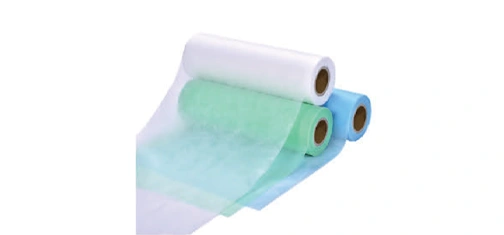
A Fabric Materials line that starts with nonwoven gives you a soft, drapable base—but nonwoven alone isn't waterproof, and it doesn't reflect. The Nonwoven Fabric Series adds those properties through a second layer: PE coating for a water barrier, or MPET lamination for a reflective or decorative surface. You'll see how each option changes what the fabric can do, and where the application list points.
What Questions Come Up Before Choosing a Laminated Nonwoven?
What does the nonwoven base contribute on its own?
The page describes the nonwoven base as providing a soft hand feel and excellent drape for consumer products. That's the property that a film or a woven substrate doesn't match—nonwoven drapes and feels soft against skin or product, which matters for tablecloths, garment bags, and protective covers that need to lie flat or wrap around an object without stiffness.
When does PE coating become the right choice?
PE coating is listed as one of the lamination options, described as providing waterproof, reflective, or decorative effects. PE is the coating that closes the fabric surface to water—it forms a continuous film on the nonwoven, so liquid can't pass through the fiber web. For a tablecloth, a car cover, or a pallet cover, that water barrier is the functional reason to add the PE layer.
PE Coating and MPET Lamination: Two Added Layers, Two Jobs
The page lists both PE coating and MPET lamination as the routes to a finished Fabric Materials product, and the two routes produce different surface behaviors.
PE coating gives the fabric a waterproof surface. The coating weight and the nonwoven base weight together determine how the fabric handles—a heavier coating gives a stronger barrier but a stiffer drape, while a lighter coating keeps more of the nonwoven's softness. The page doesn't list a specific coating weight, but it does list PE coating as a standard option across the series.
MPET lamination adds a metallized surface. MPET is a metallized polyethylene terephthalate film, and when it's laminated to nonwoven it brings a reflective or decorative appearance. The page lists MPET lamination alongside PE coating, and also lists MPET with aluminum foil texture and perforated MPET nonwoven as component options. Those variations change the surface look and the breathability—a perforated MPET layer lets air through where a solid MPET layer doesn't.
Why the base fabric choice still matters after lamination
The added layer changes the surface, but the base determines the hand and the drape. A PE-coated nonwoven and an MPET-laminated nonwoven with the same base weight will feel similar in stiffness but different in surface—the PE is a matte barrier, the MPET is a reflective film. For a decoration application, the reflective surface may be the point; for a protective cover, the matte barrier is the point. The base stays the same; the added layer is chosen for the end use.
The Application List and What It Tells You
The page lists nine applications: decoration material, tablecloth, surgical dressing, garment bag, gift bag, shoe cover, car cover, and pallet cover. That spread is wider than a single lamination option can serve, which is why the series offers multiple component combinations.
| Application | What the fabric needs to do |
|---|---|
| Decoration material | Hold a decorative surface, drape for display |
| Tablecloth | Water barrier on the surface, soft drape at the edge |
| Surgical dressing | Soft contact layer, barrier against fluid |
| Garment bag | Protect contents from dust and moisture |
| Gift bag | Decorative surface with enough body to hold shape |
| Shoe cover | Barrier against dirt and moisture, flexible fit |
| Car cover | Waterproof and reflective, conform to the body |
| Pallet cover | Water barrier, cover a stacked load |
The table shows why a single construction doesn't cover the whole list. A tablecloth needs a waterproof face with a soft drape; a car cover needs waterproof plus reflective; a gift bag needs a decorative face with enough stiffness to stand. The PE-coated and MPET-laminated options are selected against those requirements, not against a single “best” construction.
Why the component list separates the base from the coating
The page lists the main components as nonwoven coated PE, nonwoven MPET texture, nonwoven MPET aluminum foil texture, and perforated MPET nonwoven. That format—base plus added layer—is the way to read the series: the nonwoven is the constant, and the coating or laminate is the variable. A buyer specifying a product can confirm the base weight and hand first, then choose the added layer that delivers the barrier or surface the application needs.
Where Softness and Barrier Coexist
The page's feature list pairs “PE coating and MPET lamination” with “soft and flexible.” That pairing is the design claim of the series: the added layer provides the function, and the nonwoven base keeps the fabric from becoming a rigid film. A PE-coated film alone would be waterproof but stiff; a nonwoven alone would be soft but permeable. The series puts the two together.
-
PE coating: waterproof surface, matte finish
-
MPET lamination: reflective or decorative surface
-
MPET aluminum foil texture: metallic appearance
-
Perforated MPET nonwoven: reflective surface with air permeability
-
Nonwoven base: soft hand feel and drape
Where the Nonwoven Fabric Series Fits a Buyer's Spec
The Nonwoven Fabric Series from Longge Global is built around the base-plus-layer logic the page describes: a soft nonwoven substrate carrying a PE coating for waterproofing or an MPET lamination for reflective and decorative effects, with component options that include MPET aluminum foil texture and perforated MPET nonwoven. The application list spans decoration, medical, packaging, and protective covering uses, and the soft, flexible base is the constant across those uses. For a Fabric Materials buyer specifying a nonwoven product, the value sits in the modular construction—the same nonwoven base can be paired with different added layers, so the hand and drape stay consistent while the surface function changes.
What to confirm before matching a construction to an application
Confirm the application's surface requirement against the PE-coated or MPET-laminated options, the hand and drape requirement against the nonwoven base, and the breathability requirement against the perforated MPET option. The page's component list gives the starting point; the end-use requirement determines which base-plus-layer combination fits.
Let's Match a Nonwoven Construction to Your Application
Send over your application, the surface property you need—waterproof, reflective, or decorative—and the hand feel requirement—we'll help you check them against the PE-coated and MPET-laminated options in the Nonwoven Fabric Series. Talk to Longge Global about your Fabric Materials requirements and get a construction-level answer before you commit to a specification.